Field of Science
-
-
Change of address1 year ago in Variety of Life
-
Change of address1 year ago in Catalogue of Organisms
-
-
Earth Day: Pogo and our responsibility1 year ago in Doc Madhattan


Quantum computing so close or so far?
Quantum computing so close or so far? The following promotional video is quite optimistic, but it does a decent job of explaining the most basic workings and potential of quantum computing so I thought I would share. For a more in depth perspective on the physics and prospects for quantum computers see my post about my visit to D-wave and their attempts to build the first quantum computer.
Traveling: Israel and Istanbul
I just returned from the 30th Jerusalem Winter School in Theoretical Physics. It was an intensive school focusing on modern cosmology and galaxy formation with lectures from experts in the field. You can watch the lectures on online here and you can find the slides of the lectures here. In addition to just attending lectures in a boring conference room I of course got out and saw some sights in Israel like the old city of Jerusalem, the Dead Sea, and Masada. Since I was in the region I also struck out to Istanbul, Turkey. Istanbul is a place I have always wanted to see for the history, culture, and people. It was a long and winding trip and to sum it all up here are a few pictures.
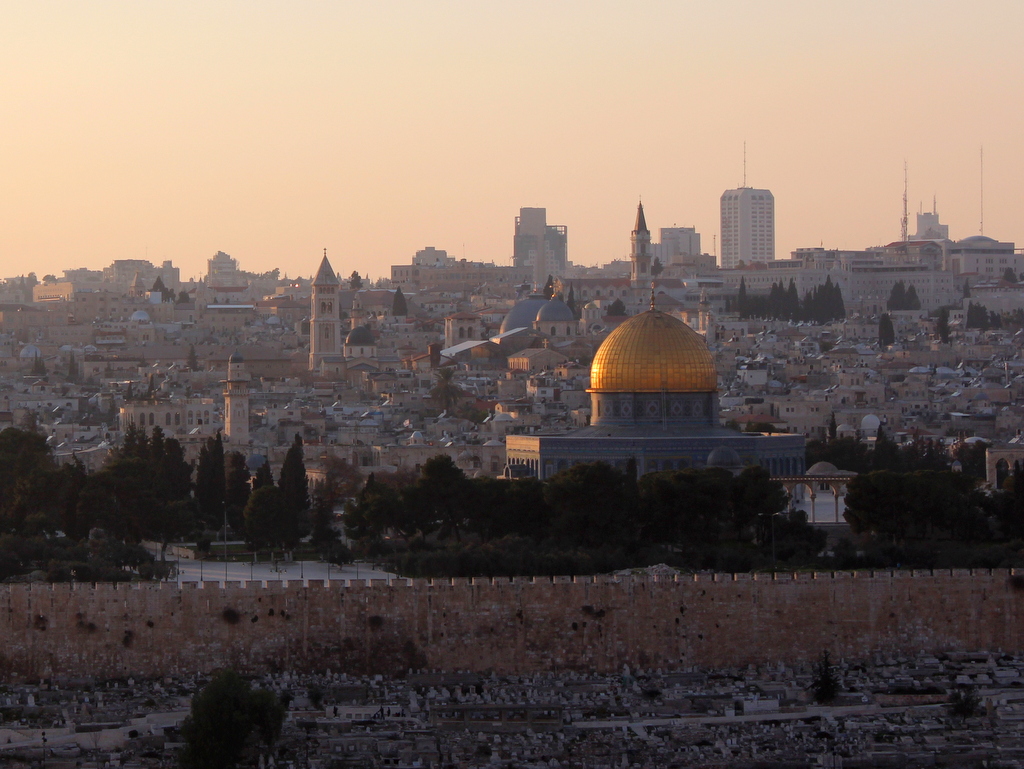


 View of a gate with of Jerusalem city walls in background.

An old column outside Mary's tomb.

 Galata tower at night.


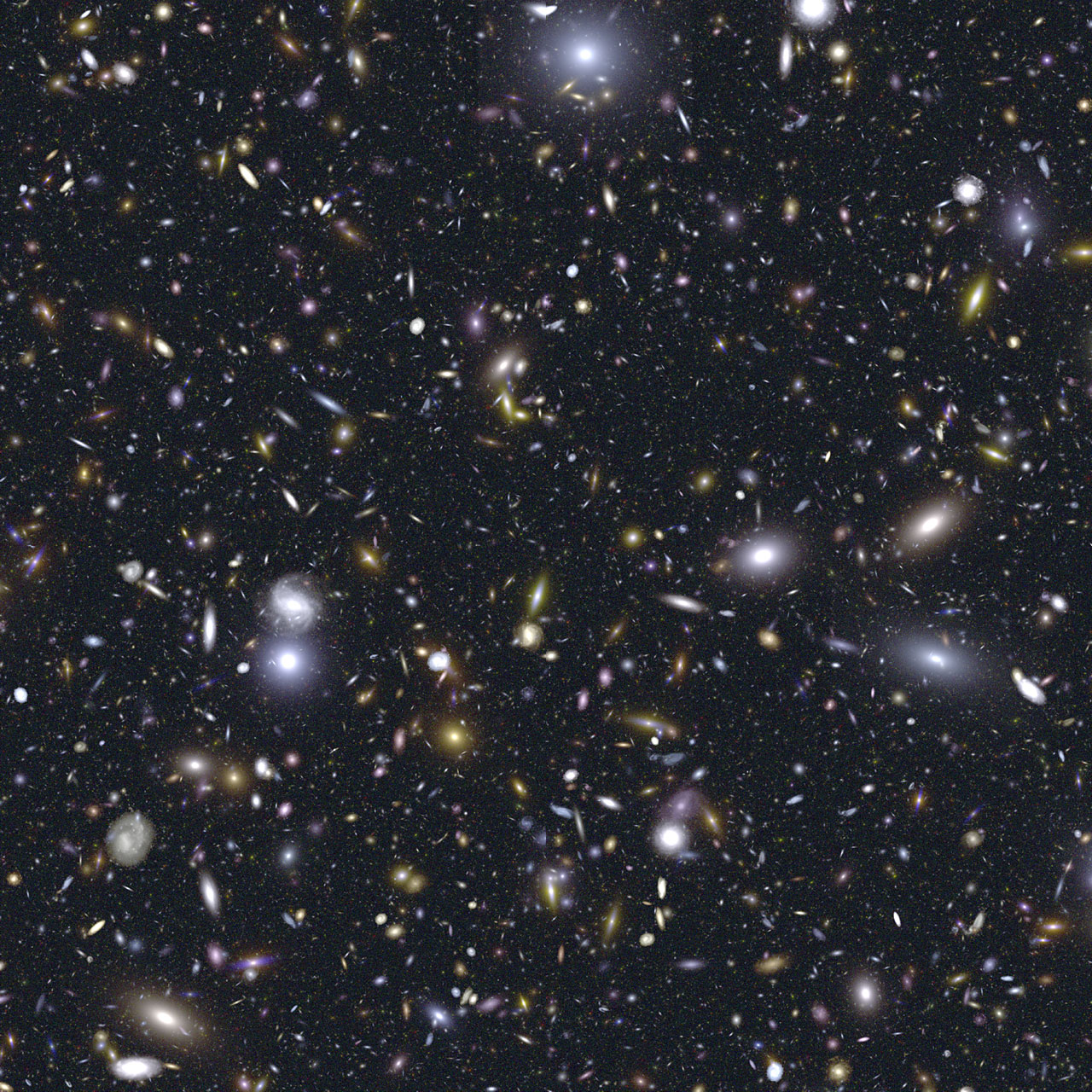
The Hubble Extreme Deep Field
Almost a decade ago when astronomers pointed the Hubble Space Telescope at an apparently featureless patch of the sky they were rewarded with a spectacular image. The was the Hubble Ultra Deep Field. The image allowed us to see that galaxies were forming as early as just a billion years after the Big Bang. The farther from Earth we look the farther back in time we see; starlight from those distant galaxies is just arriving at earth now. Now we have glimpsed even further with the Hubble Extreme Deep Field. This new image was created by aggregating 10 years of Hubble images taken centered at the same location of the original Ultra Deep Field. In addition to staking old images additional new images were included which had been taken with infrared cameras installed during the 2008 Hubble Space servicing missions. Infrared images offer important additional data for distant galaxies because the light from such distant objects has been stretched to longer wavelengths as it has journeyed across the universe. Here is the Hubble Extreme Deep Field:


If you are intrigued by Hubble's deep images of the sky there is a Google Event webinar to discuss the latest findings. The public is invited. show up online and ask questions of the astronomers involved. It is at 1 p.m. Sept. 27 and can be joined either at HubbleSite’s Google Plus page or the HubbleSite YouTube Channel.

This is the deepest image of the sky ever seen. It allows us to explore the faintest galaxies ever as far back as a time just half a billion years after the Big Bang. Soon though we will have even deeper images. The James Web Space Telescope will be a 6.5 meter diameter(or 21 foot, so big that it will be a segmented mirror that will unfold in space) space telescope that will launch in 2018. It will see further. Here is a simulated image of what the James Web Space Telescope will see:
If you are intrigued by Hubble's deep images of the sky there is a Google Event webinar to discuss the latest findings. The public is invited. show up online and ask questions of the astronomers involved. It is at 1 p.m. Sept. 27 and can be joined either at HubbleSite’s Google Plus page or the HubbleSite YouTube Channel.
2012
I got asked about 2012 the other day. Something about Mayans predicting the end of the world and or hidden planetary alignments. Sometimes I don't know where to begin addressing something so wrong. Whether you ask a scientist or a Mayan elder though they agree there is no end of days in 2012. Here is a scientist, Neil deGrasse Tyson, on the subject:
And here is David Morrison, expert on Earth impact hazards, speaking about misconceptions related to the year 2012:
The Z Machine Makes Stars and Art
I met Don Winget years ago on a cloudy night in the control room of the Otto von Struve Telescope. His enthusiasm and excitement was overflowing. I could hardly see his face, lit eerily by red lights, but his words painted a picture of far away white dwarf stars. These stars are pulsating, cooling, and perhaps intertwined with mysterious undiscovered axion particles. He continues extraordinary pursuits. He is looking for white dwarfs on earth with the Z Machine. The Z Machine releases a powerful electrical discharge over a brief amount of time to create plasma, X-rays, shock waves, and an electromagnetic pulse. The Z Machine releases several times the combined energy output of all power plants on earth for a few brief nanoseconds with each shot. Usually it does nuclear weapons research, but this wonderful research aims to simulate aspects of white dwarf stars on earth and it is inspiring art.
Perseid meteor shower 2012
Find a dark place on a late night this weekend to enjoy the Perseid meteor shower. You can even participate in citizen science by counting the number of meteors you see with NASA's Meteor Counter app.
Discovering the Higgs Boson
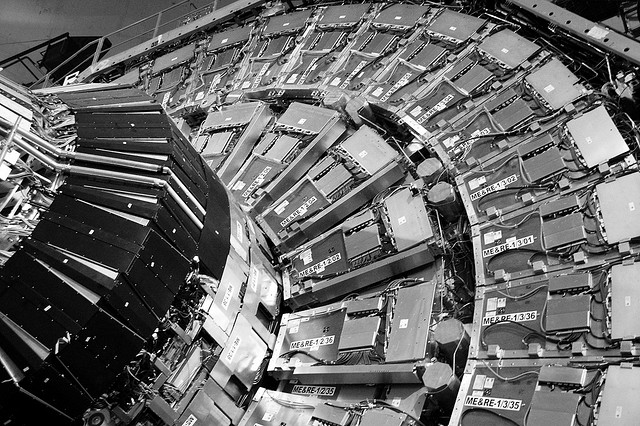
LINDAU, Germany — Tommrrow CERN will make an announcement, likely about the Higgs boson. The Higgs boson is a key part of the standard model of physics and this is a rather exciting discovery. You can read my article about the prospects for the discovery of the Higgs boson over at the Nature Lindau blog where I am writing.
Sobre el Futuro and the Lindau Nobel Laureate Conference
It may appear that I haven't been busy lately because of the death of posts here at The Astronomist. You would be right to suspect that in reality I have actually been extremely busy. I passed my general exam here at the University of Washington and I am now a proto-doctor or a PhD candidate as it were. Regardless, now that this hurtle is out of the way I just have to do a thesis. In the spare time I have been up to so many other things. I did an interview with WHAT which is an organization that aims to raise a discussion about philosophy, science, and culture. They are based out of Spain, but the idea is international and focuses on people. I was interviewed as part of their series sobre el futuro or about the future where I talked about the future of the universe and the future for humans on Earth. I really, like the quote they caught from me, "No creo que ningún astrónomo piense que estamos solos en el Universo." You can watch the interview here.

Next up I am traveling to Lindau Germany once again to cover the Lindau Nobel Laureate Conference. I will be writing with the Nature blog team. I am very excited to be returning to Lindau this year. I first covered the Lindau Nobel Laureate conference in 2010 and at the time I really didn't know what to expect. I found that Lindau is an amazing place where ideas are exchanged at a rapid pace and discussions of science and the future are pervasive. I love it. I will be attending the conference from the journalist perspective of course so I will be interviewing people, including Nobel Laureates, while at the same time learning and communicating what I discover to a larger audience. If you haven't heard of the Lindau conference before (or even if you have) I recommend checking out the Lindau Mediatheque where they have videos of the lectures given by the Laureates. I am already blogging over on the Lindau blog; the conference starts on July 1st and lasts an entire week. Please go check it out and I will talk to you again from Germany.
Next up I am traveling to Lindau Germany once again to cover the Lindau Nobel Laureate Conference. I will be writing with the Nature blog team. I am very excited to be returning to Lindau this year. I first covered the Lindau Nobel Laureate conference in 2010 and at the time I really didn't know what to expect. I found that Lindau is an amazing place where ideas are exchanged at a rapid pace and discussions of science and the future are pervasive. I love it. I will be attending the conference from the journalist perspective of course so I will be interviewing people, including Nobel Laureates, while at the same time learning and communicating what I discover to a larger audience. If you haven't heard of the Lindau conference before (or even if you have) I recommend checking out the Lindau Mediatheque where they have videos of the lectures given by the Laureates. I am already blogging over on the Lindau blog; the conference starts on July 1st and lasts an entire week. Please go check it out and I will talk to you again from Germany.
Subscribe to:
Posts (Atom)